Introduction
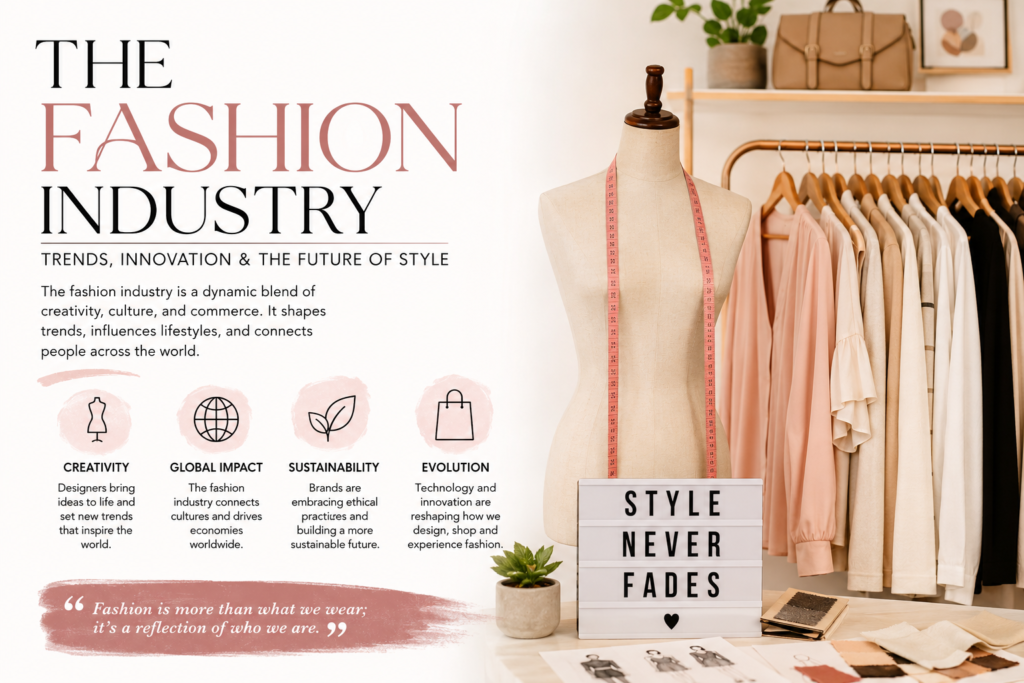
The fashion industry is one of the most dynamic and influential industries in the world. It goes beyond clothing and accessories—it is a powerful form of self-expression, culture, creativity, and innovation. From luxury designer brands to affordable fast fashion and sustainable clothing, the industry shapes how people present themselves while reflecting changing lifestyles and societal values.
Over the years, fashion has evolved significantly. Traditional runway shows have expanded into digital experiences, online shopping has transformed the customer journey, and sustainability has become a major priority for both brands and consumers. Today, technology, social media, and consumer preferences are driving rapid changes in the industry.
This blog explores the fashion industry’s evolution, key sectors, emerging trends, challenges, and future opportunities.
What is the Fashion Industry?
The fashion industry is a global business involved in the design, production, marketing, distribution, and retail of clothing, footwear, accessories, and lifestyle products. It encompasses every stage of a product’s journey—from concept creation to the final purchase by consumers.
The industry includes various sectors such as:
- Fashion Design
- Textile Manufacturing
- Apparel Production
- Fashion Retail
- Luxury Fashion
- E-commerce
- Fashion Marketing
- Fashion Technology
- Sustainable Fashion
Together, these sectors create one of the world’s largest economic ecosystems, employing millions of people and generating trillions of dollars in revenue annually.
Evolution of the Fashion Industry
Fashion has changed dramatically throughout history.
Traditional Fashion
Historically, clothing was handmade and tailored specifically for individuals. Fashion represented social class, occupation, and cultural identity.
Industrial Revolution
Mass production revolutionized clothing manufacturing, making fashionable garments more affordable and accessible.
Fast Fashion Era
Brands introduced rapid production cycles, allowing consumers to purchase trendy clothing at affordable prices. Collections began changing every few weeks instead of every season.
Digital Fashion Age
Today, consumers discover products through social media, purchase online, receive personalized recommendations, and even explore virtual fashion experiences using augmented reality and artificial intelligence.
Major Segments of the Fashion Industry
1. Fashion Design
Fashion designers create original clothing, footwear, and accessories by combining creativity, functionality, and market trends. Their work includes:
- Sketching concepts
- Choosing fabrics
- Developing prototypes
- Creating seasonal collections
- Collaborating with manufacturers
Designers often specialize in luxury fashion, streetwear, sportswear, bridal wear, or children’s clothing.
2. Textile Industry
Textiles form the foundation of fashion. This sector produces fabrics using natural and synthetic fibers.
Common materials include:
- Cotton
- Silk
- Wool
- Linen
- Polyester
- Nylon
- Rayon
- Organic fabrics
- Recycled materials
Innovative textiles now include wrinkle-resistant fabrics, moisture-wicking sports materials, antibacterial textiles, and biodegradable fibers.
3. Apparel Manufacturing
Manufacturers convert fabrics into finished garments through processes such as:
- Cutting
- Stitching
- Dyeing
- Printing
- Finishing
- Quality inspection
- Packaging
Automation and robotics have improved production speed while maintaining quality.
4. Fashion Retail
Retail connects brands with consumers through:
- Physical stores
- Department stores
- Brand outlets
- Online marketplaces
- Brand websites
- Mobile shopping apps
Omnichannel retail allows customers to enjoy a seamless shopping experience across both online and offline platforms.
5. Fashion Marketing
Marketing helps fashion brands reach their target audience through:
- Social media campaigns
- Influencer collaborations
- Celebrity endorsements
- Email marketing
- Search engine optimization (SEO)
- Content marketing
- Digital advertising
- Fashion events
Successful marketing builds brand awareness, customer loyalty, and long-term growth.
Current Trends in the Fashion Industry
Sustainable Fashion
Consumers are becoming more environmentally conscious. Many brands now prioritize:
- Organic fabrics
- Ethical sourcing
- Fair labor practices
- Recycling initiatives
- Circular fashion
- Reduced plastic packaging
Sustainability is no longer a niche concept—it is becoming an industry standard.
Digital Transformation
Technology is reshaping every aspect of fashion.
Innovations include:
- Artificial Intelligence (AI)
- Virtual fitting rooms
- Personalized shopping recommendations
- Chatbots
- Smart inventory management
- Digital fashion shows
- Augmented Reality (AR)
Brands use data analytics to better understand customer preferences and improve shopping experiences.
Rise of E-Commerce
Online shopping has become one of the biggest drivers of fashion sales.
Benefits include:
- Convenience
- Global accessibility
- Product comparisons
- Customer reviews
- Fast delivery
- Easy returns
Many fashion brands now generate a significant share of their revenue through digital channels.
Social Media Influence
Platforms like Instagram, Pinterest, TikTok, and YouTube have transformed fashion marketing.
Consumers now discover trends through:
- Fashion influencers
- Styling videos
- Product reviews
- Live shopping events
- User-generated content
Viral fashion trends can reach millions of people within days.
Personalization
Customers increasingly expect personalized experiences.
Brands now offer:
- Personalized product recommendations
- Customized clothing
- AI-powered style suggestions
- Personalized email campaigns
- Loyalty rewards
Personalization improves customer satisfaction and increases repeat purchases.
Importance of Technology in Fashion
Technology has become essential for fashion businesses.
Artificial Intelligence
AI helps brands:
- Predict trends
- Forecast demand
- Recommend products
- Improve customer service
- Optimize inventory
3D Design
Designers create digital prototypes before manufacturing physical garments, reducing costs and waste.
Augmented Reality
Virtual try-on features allow customers to visualize clothing before purchasing.
Blockchain
Blockchain improves transparency in supply chains by verifying product authenticity and ethical sourcing.
Data Analytics
Businesses analyze customer behavior to improve:
- Product development
- Pricing
- Marketing campaigns
- Customer engagement
Challenges Facing the Fashion Industry
Despite its growth, the industry faces several challenges.
Environmental Impact
Fashion contributes to:
- Water pollution
- Carbon emissions
- Textile waste
- Plastic pollution
- Overproduction
The industry is working toward greener manufacturing processes and sustainable materials.
Fast Fashion Concerns
Fast fashion encourages frequent purchases and short product life cycles.
Challenges include:
- Excess waste
- Low-quality garments
- Labor concerns
- Environmental damage
Consumers are increasingly supporting brands with ethical practices.
Supply Chain Disruptions
Global events can interrupt:
- Raw material availability
- Manufacturing
- Shipping
- Inventory management
Companies now diversify suppliers to improve resilience.
Counterfeit Products
Fake luxury products damage brand reputation and reduce company revenue. Advanced authentication technologies help combat counterfeiting.
Changing Consumer Preferences
Fashion trends evolve rapidly, making demand difficult to predict.
Brands must continuously innovate to stay competitive.
Opportunities in the Fashion Industry
The future offers exciting opportunities.
Sustainable Brands
Consumers increasingly support eco-friendly businesses.
Fashion Technology
Startups are creating:
- Smart clothing
- Digital fashion
- AI styling tools
- Wearable technology
Global Markets
International e-commerce enables brands to reach customers worldwide.
Influencer Marketing
Content creators continue to shape purchasing decisions.
Custom Fashion
Consumers increasingly value personalized products that reflect their unique style.
Careers in the Fashion Industry
The fashion industry offers diverse career opportunities.
Popular roles include:
- Fashion Designer
- Textile Designer
- Fashion Stylist
- Fashion Photographer
- Merchandiser
- Visual Merchandiser
- Fashion Buyer
- Digital Marketer
- E-commerce Manager
- Fashion Blogger
- Product Manager
- Brand Manager
- Supply Chain Manager
- Sustainability Consultant
- Fashion Illustrator
The industry combines creativity with business, technology, and marketing, making it suitable for professionals from various educational backgrounds.
Tips for Fashion Brands to Succeed
Successful brands focus on:
- Understanding customer needs
- Building a strong brand identity
- Investing in digital marketing
- Creating high-quality products
- Prioritizing sustainability
- Leveraging social media
- Offering excellent customer service
- Using data for decision-making
- Innovating continuously
- Delivering consistent shopping experiences
Customer trust and authenticity remain key competitive advantages.
The Future of Fashion
The future of fashion will be shaped by innovation, sustainability, and technology. Artificial intelligence will continue to personalize shopping experiences, while virtual reality and augmented reality will redefine how customers explore products. Sustainable materials, ethical production methods, and circular fashion models will become increasingly important as consumers demand greater environmental responsibility.
Digital fashion, virtual clothing, and AI-generated designs are also expected to grow, opening new possibilities for creativity and commerce. Fashion brands that embrace innovation while staying true to quality, inclusivity, and sustainability will be better positioned for long-term success in an ever-changing marketplace.
Conclusion
The fashion industry is much more than clothing—it is a global ecosystem driven by creativity, technology, business, and cultural influence. As consumer expectations continue to evolve, brands must adapt by embracing digital transformation, sustainable practices, and customer-centric strategies.
Whether through innovative designs, ethical production, or personalized shopping experiences, the future of fashion is centered on delivering value while protecting the environment and meeting the needs of modern consumers. Businesses that invest in innovation, quality, and responsible practices will continue to thrive in this exciting and competitive industry.